The Regionals
Peachtree City, U.S.A. An Affectionate Portrait of Atlanta, by Celestine Sibley
Peachtree City, U.S.A. An Affectionate Portrait of Atlanta, by Celestine Sibley
Couldn't load pickup availability
ATLANTIC SOUTH.
Nonfiction / History.
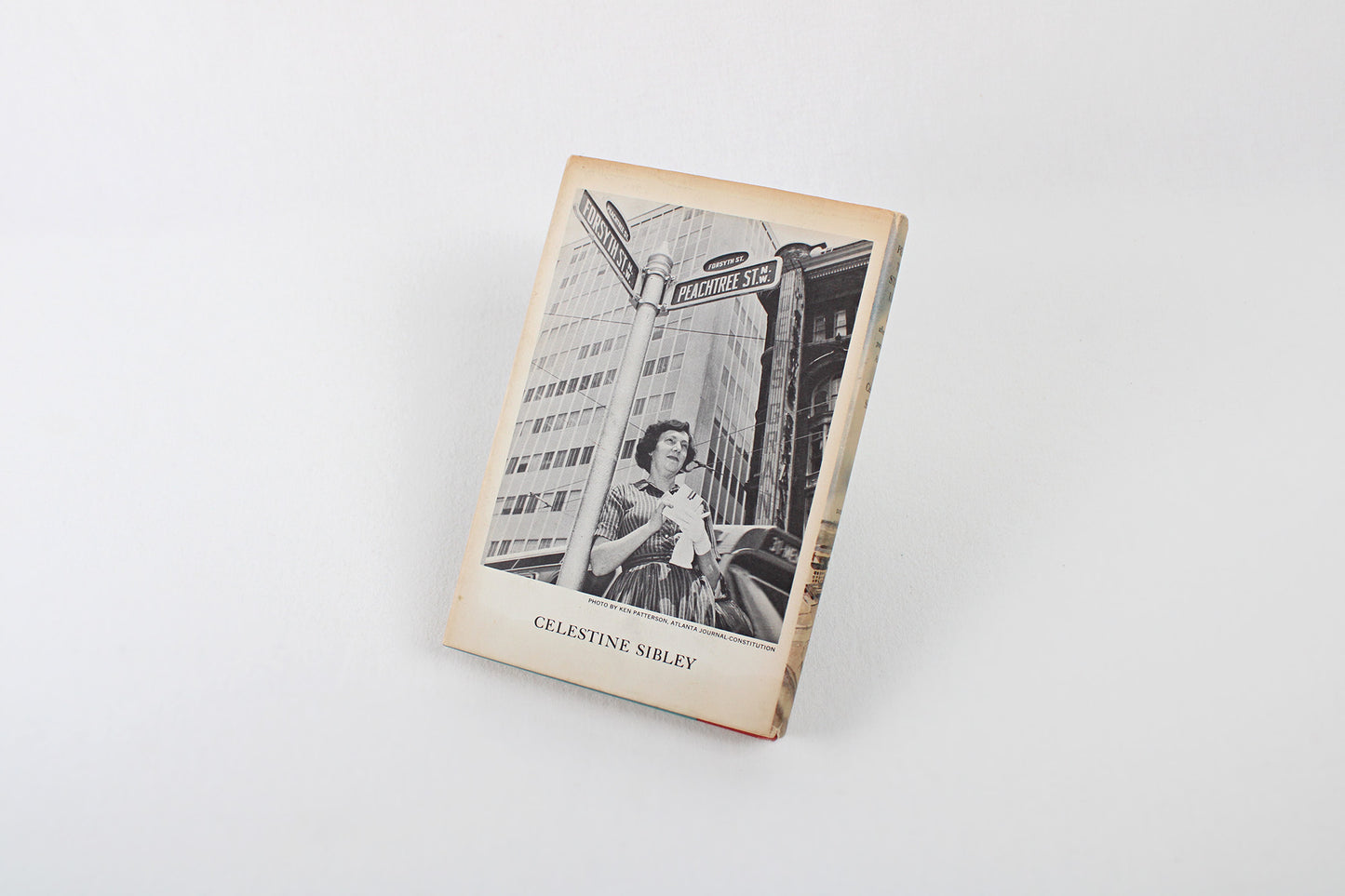
It would be easy to argue for Celestine Sibley’s inclusion as one of those carved into a Mt. Rushmore of 20th century Atlantans of influence alongside, of course, Martin Luther King, Jr., the one-of-a-kind black Atlanta leader, John Wesley Dobbs, the irascible and relentlessly modernizing mayor, William Hartsfield, Coca-Cola magnate, Bob Woodruff (known simply as “The Boss”), and Sibley’s fellow journalist and mentor, Ralph McGill. All helped shape the modern city’s image in tremendous ways. But perhaps no one did it more even-handedly or with more charm than Celestine Sibley. Breaking into what was unquestionably a man’s vocation at the time, it was that so many men had been pulled away from peacetime employment during World War II that allowed Sibley her Atlanta opportunity. Her obvious talent was immediately recognized by Ralph McGill (editor of The Atlanta Constitution). With an “on the street” focus, Sibley secured her place by 1944 when she was given a regular column. With a focus on the courts and politics, she became a fixture in the annual Georgia state assembly. She won early renown for taking on tough cases, including a local murder in which her reporting resulted in a wrongful conviction being overturned. Sibley would go on to be one of the most recognizable Atlanta voices in print across the rest of the 20th century due mainly to her popular nationally-syndicated column, which ran the gamut of southern culture. In step, she would go on to become a writer of popular fiction too. But Sibley, herself, seemed always most proud of her reporting career, one that spanned a half-century. She was there to track Atlanta's rise as the economic and transportation powerhouse it is known for today, reporting across the tumultuous and violent civil rights era up to and beyond the locally electric election of Georgia’s governor, Jimmy Carter, as the 39th president of the U.S. This book, then, is her living portrait of the city that she covered and became a famous spokesperson for, having been written at the height of her popularity in the early 1960s. At that time, Atlanta was already showing itself unique for the South, willing to go a step or two further in desegregating, willing to go all-in on its increasingly urban character in a land long tied to its agricultural past, and this while always keeping its primary focus on what was best economically for the city and its inhabitants. A mildly progressive take on social relations for a white author in its time, the book can nonetheless appear arcane in ours; especially given Sibley’s warm embrace of the largely mythic and apologist Gone With the Wind (written by another Atlantan). Still, pinning the book and the roots of any critique of it where it belongs on the historical timeline—the early 1960s—here is a city portrait in book form whose main purpose seemed to be reminding those who called it home, while alerting the country at large, that Atlanta was a city restlessly focused on what was next. [Condition: Used Very Good. Given as a gift in 1963, it is possible this book was never read. Though the dust-jacket has a few slight tears and some minor shelf wear, the actual hardbound is in pristine shape. Aside from the gifted greeting there are no marks, there is no foxing or other age-related issues; the binding itself still so crisp you can feel its integrity.]
Condition: Used Very Good.
General Type.
Celestine Sibley.
Doubleday & Company, 1963.
Hardcover (First Edition), 239 pgs, 5.75 x 8.5” / 1.25 lb
1 in stock